
Look, I know this guy can write: I picked up Fix This Next at a mentor’s suggestion and immediately started reading two of his other books. I also know that the manpower and time put into a book is going to wildly differ from what’s invested in weekly or daily email marketing bids. But look at this thing:

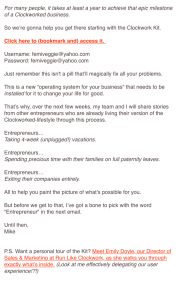
This wasn’t even the first or second email I got from one of his teams that week, and the sheer deluge of words has already led me to unsubscribe from all the lists I joined: I think I made it all of a week. Maybe two?
Mike’s business as an author revolves squarely around the effective deployment of words. He’s good at it, both in the printed and spoken realms. But there’s something so different about his marketing emails that I just can’t get past (about the second line, usually). Actually, I think it’s two things.
The first is context: where words appear inherently shapes how we expect to interact with them. I have a different set of expectations when I sit down in my wingback with a hardbound book than I do when I pop open my email on the desktop. One of the key expectations that matters here is time. I don’t want to invest more than a couple of minutes in a marketing email–anything longer and it should be a blog entry or a much less regular newsletter. This email is. so. long. I’ll skim it at best, and then I have to ask: is it accomplishing what it set out to do?
Which brings me to the second difference that matters here: purpose. The purpose of Mike’s books is to argue his ideas, to support them with careful thinking and explicated examples like his favorite anecdotes. Marketing emails are are/should be focused on creating a hook. If you’re working primarily to get someone in the door, to funnel them down that sales lead so they might actually purchase your good/service/time, then you can’t ask as much of them in terms of work. This email makes me work, and it takes a chunk of my time that could be spent working on things that immediately generate revenue. It also uses so many conflicting and overlapping attention highlights (underline URLs in different colors, bulleted lists, bold, misused quotation marks for emphasis) that I can’t effectively skim it because my eye doesn’t know where to look.
If I were to offer Mike back a piece of the advice he so readily and usefully dispenses to others, it would be this: tighten it down. The tone is there, the message is there, and an audience already interested in what he has to say might wade through to find it. But I’m willing to bet that less frequent, less lengthy (or both) emails would much more effectively generate new readers and convert those readers into purchasers of his support products.

 Something Polished