
While some outlets did immediately clock satire, several others ran the story without even a careful close read. Satire is an especially tricky kind of writing, sure, but it also highlights an essential truth: sometimes the hardest part of writing is nailing the genre expectations, and sometimes nailing the genre expectations is how we produce great writing.
Let’s do a breakdown, shall we?
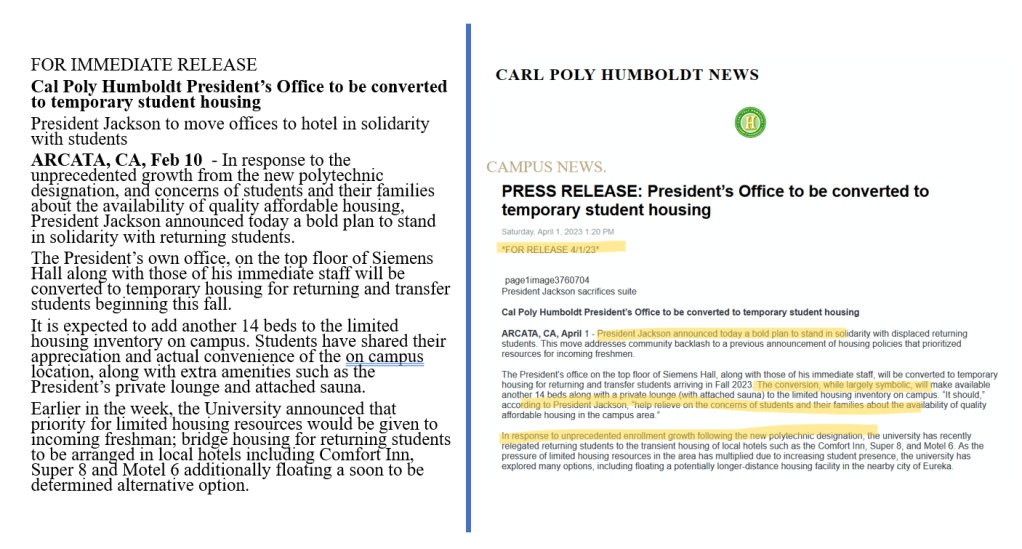
On the left is the original email I received from an account administrator. On the right, my edits that eventually released to the public. I didn’t change much of the essence, but I -did- do a quick refresher course on press release conventions and adapt the original text to better suit a reader expecting to see one. In this first section, you can see a slight concision-ing, a reordering of clauses to mimic the steadier rhythm of journalistic writing, and a careful check for the passive voice we’ve all come to love in our news media–while shifting the lede to highlight the agent in our story.
The third paragraph here is the most important: it connects to very recent news about the campus, while highlighting the original author’s joke about the possible barge housing.
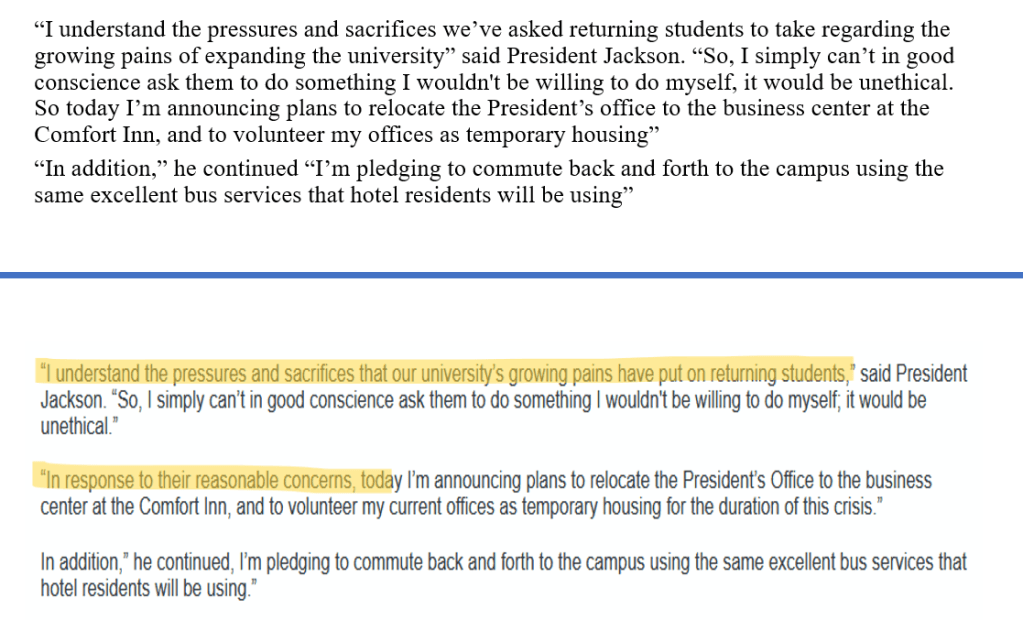
In this second portion, I’ve broken the fabricated quotes into smaller pieces that might offer quick soundbytes for the news, and I’ve removed some of that passive-voicing since we’re now attributing the language to an actual speaker. Honestly, though, after a quick look through some of the president’s past statements: both of these tones aren’t far off. University presidents, it seems, are subject to some of the same speech conventions as reporters? Or maybe he’s just equally wary of becoming an accountable agent?
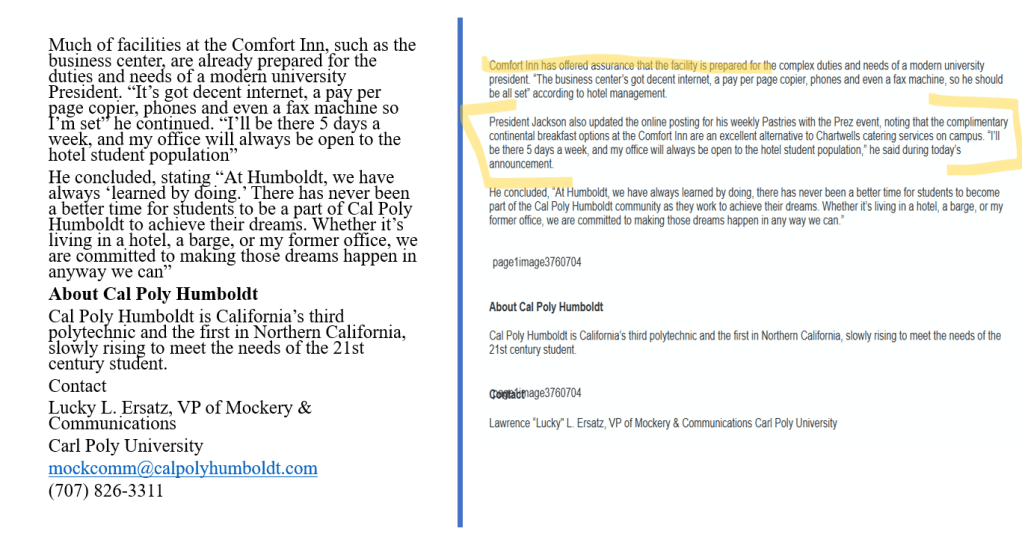
My largest contribution is the second to last paragraph: modeling on actual events I experienced as an underpaid and underappreciated adjunct, I offered a bonus element to the faux news that is both believable and ludicrous. It’s exactly the kind of move a floundering president might make, and also exactly the kind of thing that should have tipped off the actual journalists–which I think it must have, since it’s conspicuously absent from the aired reports.
Two lessons here, I think. 1. Always, always, always double check your sources (it’s right there in the byline!) and 2. Applying a clear knowledge of genre conventions can take you far.

 Something Polished